

Last updated September 7, 2026
Selecting good captions for pictures is no longer about finding the perfect quote. It is about creating a dialogue. This guide uses data from industry leaders like Adobe Express and Later to provide a strategic framework for transforming static posts into interactive experiences. We use microblogging, CTAs, and social polling to drive meaningful audience engagement.
1. Ask a strategic question to invite immediate audience participation.
Writing good captions for pictures requires shifting the spotlight from your own image to the viewer’s personal experience. When you post a photo, your audience is often looking for a reason to stop scrolling. Give them a clear entry point. Posing specific questions about the photo’s content can generate more comments than a generic "thoughts?" prompt. These open-ended questions do more than just start a chat. They signal to the Instagram algorithm that your content is high-value. This helps push your post to a wider audience. If you find yourself stuck, try using interactive narratives to turn a single image into a conversation starter. It should feel natural. Not forced. Always aim for questions that are easy to answer to minimize the friction of engagement.
2. Use Pollaroo to crowdsource the best caption through social polling.

We know the frustration of sitting with a great photo but having no idea how to frame it. Pollaroo allows you to stop guessing which caption is "good" by using real-time photo polls to get anonymous feedback before you ever hit "post" on your main feed. Unlike static Instagram captions that rely on hope, we turn any photo into a "this or that" interactive narrative to settle debates nationwide. You can use our photo polls to test two different caption styles against each other. See which one resonates with a real audience. This data-driven approach removes the social anxiety of posting a "flop." By gathering opinions from our community first, you ensure that when you finally go live, you are using the exact wording that people actually want to engage with. It is a more scientific way to handle your social presence. You move beyond guesswork and into verified audience preferences. Visit Pollaroo to see how this simple shift in workflow can change your engagement metrics.
3. Prioritize authentic messaging over pretend perfection to build trust.
In 2026, audiences are exhausted by overly curated, "perfect" lifestyles. They prioritize authentic messages (and behind-the-scenes realness) over a polished facade. Use your caption as a microblogging space to share the actual story behind the photo. Instead of just describing what is in the frame, explain why the moment mattered. Tell them what went wrong just before the shutter clicked. According to Adobe Express, authenticity acts as the punchline to a post’s visual setup. It offers a genuine window into who you are. This vulnerability builds a foundation of trust that generic quotes simply cannot match. Whether you are sharing a struggle or a small win, being real helps your followers feel a human connection to your profile. If you are posting a group shot, you might even try specific captions for friends pic to boost engagement. Highlight the actual, unedited dynamics of your friend group rather than a staged pose.
4. Front-load your most important words to capture attention before the ‘more’ button.
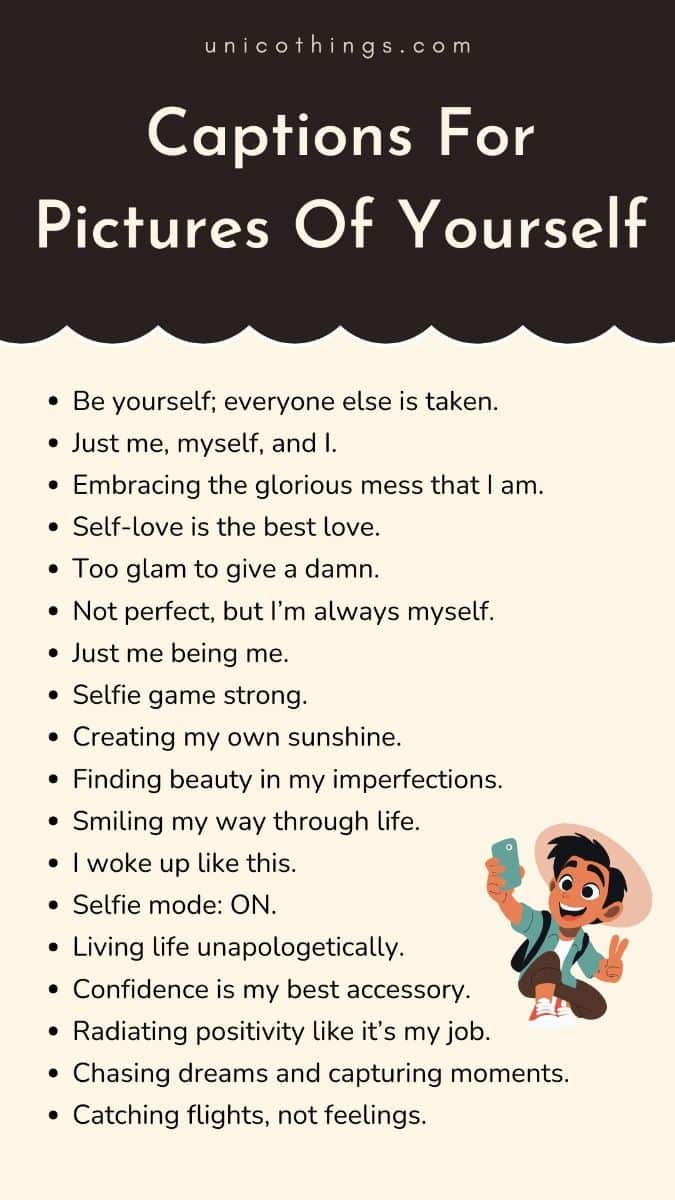
Image source: pinterest.com
The first few words of your caption are the most valuable real estate on any social platform. Because apps like Instagram truncate long blocks of text, your "hook" must appear immediately. If your lead-in is boring, users will never click that "more" button to see the rest of your story. Place your primary message or a compelling, bold statement before any emojis or hashtags. This first line establishes the vibe of the post. It lets users know whether they should invest time in reading further. Effective captions are designed to capture attention in the first few seconds. This is especially true for selfies. Your words need to match the visual energy of the shot immediately. To make sure your visual and text are perfectly aligned, use expert selfie tips to create a cohesive package that stops the scroll. Don’t bury the lead at the bottom of a paragraph.
5. Apply a ‘Call to Action’ (CTA) to direct user behavior.
A photo without a clear instruction is a missed opportunity for growth. You must explicitly tell your audience what to do next to convert passive scrollers into active participants. Whether it is "Tag a friend who needs to see this" or "Click the link in bio," a Call to Action (CTA) provides a roadmap for engagement. CTAs are a key tool for driving specific behaviors, but they must match the intent of the photo. Don’t ask for a sale on a deeply personal or sentimental post. It feels opportunistic and breaks the trust you’ve built. Match the CTA to the mood. If you’ve shared a travel photo, ask people to name their next dream destination. If you’ve shared a tip, ask them to save the post for later. By giving your followers a small, easy task, you increase the likelihood that they will interact with your content repeatedly over time.
6. Reflect on your personal story to create narrative-driven captions.

Image source: adobe.com
Authenticity is the cornerstone of modern social interaction. According to data from Finds.Life.Church, more than 27,000 people search for good captions for pictures of themselves every month. They often struggle to find words that feel genuine. The solution lies in reflecting on your own experiences and memories to build a narrative foundation. When you move beyond basic descriptions and share your aspirations, you foster deeper connections based on shared values.
Narrative captions allow your audience to see the person behind the screen. This shifts the focus from vanity to vulnerability. This approach to microblogging transforms a standard update into a bridge for community building. Instead of just showing a finished product, describe the effort it took to get there. Tell the lesson you learned along the way. By rooting your text in your personal history, you create a unique signature that cannot be replicated by AI generators or generic quote lists. This ensures your profile remains a place of real human dialogue.
7. Incorporate targeted hashtags to increase discoverability.
While your words engage your current followers, hashtags are the primary tool for reaching people who do not yet follow your account. Modern social media marketing emphasizes prioritizing quality over quantity. Avoid flooding your post with dozens of generic tags like "love" or "happy." These often attract bots and dilute your actual message. Combine niche-specific tags that describe your unique community with a few broader industry terms. This balances reach and relevance.
Strategically chosen keywords act as a filing system. They help the algorithm categorize your content correctly. Placing your hashtags at the end of the caption or in the first comment can keep the visual aesthetic clean. You still provide the necessary metadata for search. When you use relevant tags, you place your photos in front of users who are actively searching for those specific topics. A single post becomes a long-term discovery asset.
Transitioning from Static Captions to Dynamic Social Polling

Modern engagement requires moving beyond one-way communication to two-way interactions. While traditional captions are helpful, they often leave the creator guessing about what their audience actually prefers. Pollaroo allows users to stop guessing which caption is "good" by using real-time photo polls to get anonymous feedback before posting. This shift from a static statement to an interactive narrative allows your followers to feel like they are part of your decision-making process. It naturally increases the time they spend viewing your content.
By utilizing social polling, you can turn a simple selfie into a nationwide debate. Instead of writing a long paragraph and hoping someone reads it, you can present two options and ask your community to vote. We offer question-based photo engagement tools to help find the right prompts to spark a reaction. Visual storytelling is essential to meet the high-energy demands of these interactive formats. Transitioning to these dynamic styles ensures your content remains relevant in an increasingly crowded digital landscape.
Measuring Success Beyond Simple Likes

In 2026, the value of a post is measured by meaningful comments and shares rather than vanity metrics like "likes." A high like count does not always translate to a loyal community or a successful brand. Look for save rates. Watch the depth of the conversations happening in your comment section. If people are tagging their friends or writing long responses to your prompts, your caption strategy is working.
To refine your approach, compare the engagement rates of short, punchy captions against longer microblogging styles. Find your brand’s specific sweet spot. Integrating data-driven insights into your wider social media marketing strategy can help you identify patterns in what your audience responds to most frequently. By analyzing these data points, you can move away from guessing and toward a predictable model of growth. The goal is to create content that serves as a conversation starter. Every time you post, you are building a lasting relationship with your viewers.
Frequently asked questions
What are some good captions for pictures that encourage voting?
Use "This or That" prompts to let your audience choose between two distinct options. You can also ask for a rating on a scale of 1–10 to generate quick, high-volume interaction. You can also deploy Pollaroo to host a formal photo poll where users can cast anonymous votes on their favorite version of an image or a specific caption choice.
How do you write a catchy caption for a selfie?
Start with a bold "attitude" hook that projects confidence and captures attention immediately. It is helpful to use expert selfie tips to ensure the visual quality matches the high-energy tone of your text. Keep your writing short and witty to let your personality shine through without over-explaining the photo. This allows the image and text to work together.
Does caption length actually affect the Instagram algorithm?
Yes. Longer captions increase "dwell time," which signals to the algorithm that your content is high-value and engaging. However, the quality of the first two lines is critical. They determine if a user clicks the "more" button. A strategic mix of short, punchy captions and long-form interactive narratives usually performs best for maintaining variety.
How can I get people to actually answer the questions I ask in my captions?
Keep the questions easy to answer so there is low friction for the user. Offer your own answer first in the text to set the stage and make the interaction feel safer for others. You can also use specific prompts like captions for friends pic to boost engagement. This helps you learn which questions spark the most curiosity.
Stop guessing what your audience wants to see and start letting them tell you. If you want to transform your standard posts into a vibrant community discussion, download Pollaroo and start polling to see real-time results today.